What's actually in Google's Knowledge Catalog
Katie Kaczmarek-15 Sept 2026
Insights
Google BigQuery data warehouse, SQL queries, and analytics data processing (185 posts)
Explore a topic across our insights
185 results · Page 1 of 11

A year ago, I wrote about getting a BigQuery warehouse ready for AI ( Easy ways to prepare your BigQuery warehouse for AI) , but didn't look properly into Knowledge Catalog (known as Dataplex at the time). We decided to go back and look through Google's Knowledge Catalog properly: what's actually in there, how it works and what it relates to. What Knowledge Catalog is Knowledge Catalog is Google's metadata layer for BigQuery data (and a few other sources). It sits alongside your tables rather

Google's Knowledge Catalog has been renamed four times. Data Catalog, then Dataplex Catalog, then BigQuery universal catalog, then Dataplex Universal Catalog, and now Knowledge Catalog, as of 10 April 2026. The API, gcloud and IAM roles still all say "dataplex". If you land on a page that mentions Dataplex and wonder whether you're reading something out of date, you're probably not. That's just the product's fifth name in four years. I spent some time looking through the different sections of K

There is a particular kind of frustration that comes from staring at a query you know is correct and watching it fail. No syntax error. No logic problem. Just a wall. We hit two of them on the same project. What we were building The job was to migrate ga4_daily_snapshot for a large enterprise client from a BigQuery scheduled query into a proper Dataform pipeline. The scheduled query had been added to over time until it was too large to maintain with any confidence. Moving it to Dataform w

There is a pattern that appears in a lot of BigQuery pipelines and looks completely reasonable. You have a control table that stores the latest processed date. Rather than hardcoding a date into your query, you pull it dynamically: SELECT * FROM `project.dataset.events` WHERE event_date = ( SELECT latest FROM `project.dataset.control_table` ); The query returns the right results. The logic is clean. And if your events table is large and date-partitioned, you might be scanning the entire

If you have ever opened a GA4 export in BigQuery for the first time and found yourself looking at a column called event_params that seemed to contain an entire table inside each row, this post is for you. Arrays are not trying to make your life harder. Once you understand why they exist and what to do with them, they stop being intimidating. Why BigQuery uses arrays GA4 tracks events. Each event can have many parameters. A purchase event might have a transaction ID, a value, a currency an

At some point, most BigQuery users run a query they instantly regret. A missing WHERE clause on a table that turned out to be enormous. A JOIN that multiplied rows in a way nobody intended. A curiosity query on an unfamiliar dataset that scanned several terabytes before you could cancel it. By the time the query finishes you already know something went wrong. And you don't find out the cost until the billing report lands. There is a setting in BigQuery that sits between you writing a query a

Say you want to find the entry page and exit page for every session in your events table. The natural query writes itself: SELECT CONCAT(ga_session_id, '-', user_pseudo_id) AS session_key, event_timestamp, page_path, FIRST_VALUE(page_path) OVER ( PARTITION BY CONCAT(ga_session_id, '-', user_pseudo_id) ORDER BY event_timestamp ) AS entry_page, LAST_VALUE(page_path) OVER ( PARTITION BY CONCAT(ga_session_id, '-', user_pseudo_id) ORDER BY event_timestamp ) AS exit_pag

Google made data strength central at GML 2026 and now measures it in Google Ads. But it is not a setting you switch on. Here is what actually builds it.

UK universities face a deficit crisis. Student Recruitment Intelligence can transform Clearing from chaos to precision.

Dara and Matthew recap 2025 with 12 top highlights, AI, analytics, and the best moments on The Measure Pod.

How Charles Stanley unified customer data with a Google Cloud solution, improving journey visibility, data reliability, and personalised marketing.
Dara and Matthew chat with Juliana Jackson on her journey, product mindset, and how AI is shaping modern analytics.
Yali Sassoon joins The Measure Pod to discuss Snowplow’s growth, AI innovation, data challenges, and the future of user experience.
Johan van de Werken joins The Measure Pod to discuss GA4Dataform, BigQuery, and the future of analytics engineering and automation.
In this episode of The Measure Pod, Dara and Matthew sit down with Mark Edmondson, AI Engineer, founder of Sunholo, Aitana, and board member at 8-bit-sheep.
At the start of the year, if you’d asked us whether Measurelab would be standing shoulder to shoulder with Europe’s biggest consultancies by September, we would've been surprised. Not because we don't believe in ourselves, but because these things feel so distant - until suddenly, they’re not. So, here it is: we’ve been awarded the Marketing Analytics Services Partner Specialisation in Google Cloud Partner Advantage. What’s the big deal? In Google’s own words (with the obligatory Zs): “Spec
In this episode of The Measure Pod, Dara and Matthew sit down with Gunnar Griese from 8-bit-sheep to discuss MCPs and their growing role in digital analytics.
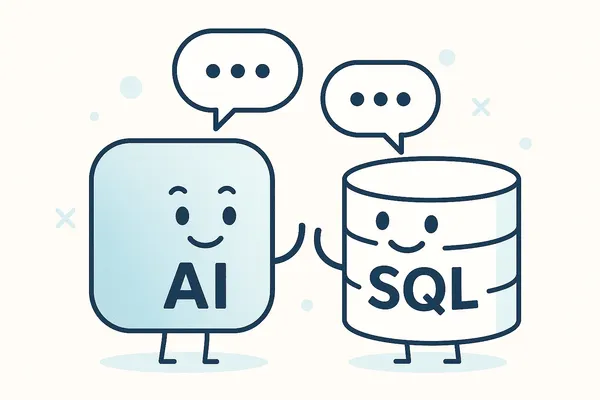
BigQuery just got a major upgrade, you can now plug directly into Vertex AI using the new AI.GENERATE function. Translation: your analytics data and generative AI are now best friends, and they’re hanging out right inside SQL. That opens up a whole world of new analysis options for GA4 data, but it also raises some questions: * How do you actually set it up? * What’s it good for (and when should you avoid it)? * Why would you batch the query? Let’s walk through it step by step. Step 1: H
